




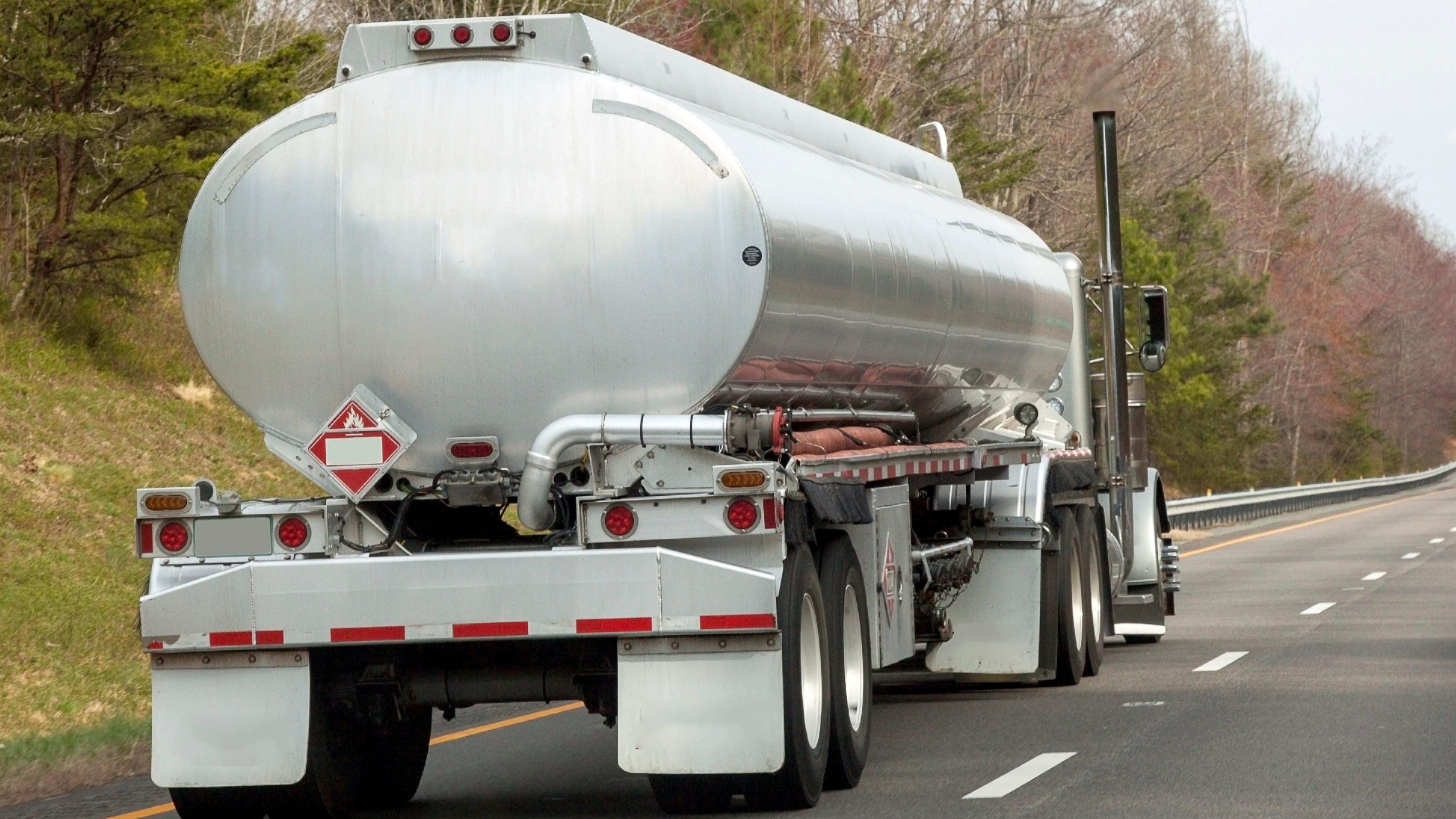
Fuel transportation is a logistics-driven environment. Trucks hauling tanker trailers are typically loaded at terminals using base-mounted pumps, while truck-mounted pumps are most often used for offloading at the delivery site.
Operational success is measured in throughput, safety and uptime: a pump needs to start when it’s needed, prime reliably and transfer the load efficiently without creating frequent maintenance interruptions.
Truck operations generally fall into two broad categories. Bulk transport trucks (often eighteen-wheelers) move high volumes and typically require larger pumping capacity, while delivery trucks commonly integrate a metering system for precise dispensing.
In many regions, fuel delivery trucks carry both gasoline and diesel in the same vehicle, which means systems are designed to prevent cross-contamination, often using dedicated pumping and metering paths for each product.
Fluids Commonly Handled in Fuel Trucking
The most common fluids in fuel trucking are low-viscosity refined hydrocarbons such as gasoline and diesel. Many fleets also handle jet fuel and aviation gasoline depending on the distribution network. Fuel composition can vary by geography and season, and modern supply chains frequently include ethanol and biodiesel blends, which makes material compatibility a critical part of pump selection.
Beyond main fuels, transport operations may handle smaller volumes of additives, lubricants and cleaning fluids. Some fleets also move diesel exhaust fluid (DEF/AdBlue) as part of broader transportation support operations, a different fluid category that typically requires stainless and compatibility-focused pump construction.
Sliding Vane Pumps for Truck Offloading and Fuel Delivery
In truck-mounted fuel service, sliding vane pump technology is widely used because it aligns well with the operating realities of fuel transport.
Sliding vane pumps are positive displacement pumps that self-adjust for wear, helping maintain flow rates over time. They also provide strong self-priming capability and can be more tolerant of brief dry-run conditions during real-world transfer events.
For refined fuel trucking specifically, Blackmer® TX Series truck-mounted sliding vane pumps are purpose-built for fast, quiet unloading on tank trucks and transports. TX/TXD models are commonly selected for petroleum fuels and compatible blends because they combine consistent PD flow with field-proven durability in transport duty cycles.
Where fuel blends are a factor, TXD models are positioned as an industry standard for refined fuel truck pumps and include options for biodiesel and ethanol compatibility.
Practical selection often comes down to matching flow requirements, expected differential pressure, mounting constraints and the specific blend and temperature conditions the truck will see.
In fuel delivery, seal life and vane life matter because they are primary wear components. Longer life directly reduces downtime and lowers the total maintenance burden, especially for fleets that are operating on tight schedules and cannot afford frequent pump service interruptions.
AODD Pumps for Additives, Maintenance and Support Transfer
While sliding vane pumps dominate primary truck offloading for refined fuels, air-operated double-diaphragm (AODD) pumps are frequently used in transport and yard environments for support roles, such as transferring additives, handling small-volume fluids, spill response, draining sumps and general maintenance tasks. For fuel transfer duties where a diaphragm pump is appropriate, Wilden® UL-compliant fuel transfer AODD pumps are listed to UL 79 for fuel transfer applications.
AODD pumps are air-driven, which can be useful in locations where electrical power is limited or where teams prefer an air-powered solution for portability. They are also valued for simple maintenance and broad chemical-compatibility options when the duty is not high-volume primary fuel unloading.
For parts and pump options available through the PSG® Store, you can browse by brand: Shop Wilden® and Shop All-Flo™.
Key Pump Selection Factors for Fuel Trucking Applications
Successful pump selection in fuel trucking is less about theoretical performance curves and more about whether the pump performs consistently under real conditions. Flow rate and pressure requirements must be evaluated alongside suction conditions (hose length, lift, strainers/filters), vapor pressure of the fuel, temperature swings and duty cycle.
Material compatibility matters not only for the fuel itself, but also for any additives or blend components that could affect elastomers and seals over time.
System design details can also be decisive. Many truck-mounted fuel pumps are intended for offloading rather than bidirectional loading and unloading. Metering requirements, product segregation (gasoline versus diesel), and safety practices such as proper bonding and grounding should be accounted for early in the design. Also, consider serviceability: ease of rebuild, availability of wear parts, and the fleet’s typical maintenance intervals.
Maintenance, Repair and Replacement Considerations
In transport applications, maintenance decisions are usually driven by reliability and downtime risk. Seal wear, vane wear and loss of throughput are common indicators that service is needed. Because many transport fleets operate with little tolerance for missed delivery windows, teams often keep critical spares on hand and standardize on proven pump platforms to simplify training and genuine parts management.
Cold-weather operation is also a reality for many fuel haulers. Pumps routinely operate outdoors in freezing climates, and reliability is supported by practical operating procedures such as avoiding extended dry running, using appropriate materials for temperature exposure, and ensuring fluids and components are managed to prevent freezing-related damage when water or washdown is involved.
Partnering on Fuel Truck Pump Solutions
PSG® supports fuel trucking and transportation through brands such as Blackmer® and fuel-transfer AODD solutions from Wilden®. Many teams start by narrowing options using the Pump Finder, then validate materials and configuration with an application specialist.
If you need help selecting a pump for a fuel trucking or transportation application, our team can assist with sizing, material selection and technology recommendations. You can contact us directly to speak with a specialist.
What pumps are most commonly used on fuel tanker trucks?
Seal-less diaphragm pumps are commonly used for glue and ink transfer because they tolerate intermittent duty, reduce leak risk, and can be configured with materials compatible with many adhesives and inks. The right configuration depends on viscosity, abrasiveness, and chemical compatibility.
Are truck-mounted fuel pumps typically used for loading and unloading?
Rotary vane pumps are positive displacement pumps that can self-prime, strip lines, and maintain flow over a wide viscosity range. In services like black liquor transfer, these characteristics can align well with the real operating conditions and the need for reliable sealing and serviceability.
Why do fuel fleets often use dedicated pumps and meters for gasoline and diesel?
Centrifugal pumps are typically the best fit for high-volume utility services such as cooling water, washdown, and other water-like fluids where efficiency and continuous flow matter most. Selection should consider NPSH, suction piping conditions, and the expected flow window.
What is the difference between UL and ATEX ratings for fuel transfer equipment?
The most common accelerators are abrasives (fillers, pigments, fine solids), incompatibility with chemicals or cleaners, and poor suction conditions that create cavitation or excessive stress. Proper material selection, good suction piping practices, and proactive maintenance planning are the fastest path to longer service life.

