Get Your All-Flo Pumps and Parts Now With FREE SHIPPING - Ends 2/28. SHOP NOW >



Pumps for Bilge in Maritime, Shipbuilding and Marine Systems
Bilge pumping systems succeed or fail based on how well the pump tolerates air ingestion, debris and intermittent operation. In maritime and shipbuilding environments, the correct bilge pump is the one that continues to move fluid when suction conditions collapse, solids enter the system and operators cannot intervene immediately.

Contributors
This page was developed using expert insights from PSG® subject matter experts with decades of experience supporting marine, shipbuilding, industrial and terminal pumping applications.
Bilge pumping is not a clean transfer application. It is an environmental control and vessel-safety function that must operate under worst-case assumptions. Unlike some other markets, bilge systems are expected to perform reliably when conditions are already degraded.
From an engineering perspective, bilge systems are designed around failure tolerance rather than optimization. Flow rate, efficiency and steady-state performance are secondary to the ability to evacuate water when suction is unstable, fluids are contaminated and access is limited.
Pump technologies that perform exceptionally well in controlled industrial processes may struggle in bilge service, while more forgiving designs often succeed.
Bilge fluids are unpredictable mixtures of seawater, freshwater, oil, fuel residue, rust, scale and debris. Air is almost always present. Suction conditions change continuously as vessels pitch, roll and load.
Pumps are commonly installed below deck with long suction runs, elevation changes and limited maintenance access. These realities place sustained stress on pump technologies that rely on stable suction, tight internal clearances or continuous liquid presence.
The engineering goal of a bilge system is therefore not precision or efficiency. It is survivability, reliable restart and continued operation under abuse.
Defining the Bilge Duty Beyond Flow Rate
Flow rate alone is a misleading design input for bilge service. A pump that meets GPM requirements under ideal conditions may fail quickly when exposed to real bilge environments.
Bilge duty must be defined by how the pump behaves as conditions degrade. For example:
Entrained air is common.
Suction lines are frequently partially flooded.
Debris such as rust flakes, gasket material and fasteners routinely enter the system.
Operation is intermittent, often with long idle periods followed by sudden demand.
Pumps may be required to start dry or restart after sitting with contaminated fluid.
These conditions drive failure modes such as loss of prime, valve sticking, seal distress and cavitation.
Supporting reliability also involves system-level discipline, such as:
Regular inspection and cleaning of suction lines reduces debris accumulation.
Selecting self-priming or air-tolerant pumps to mitigate loss of prime during restart.
Instrumentation that alerts operators to air ingress or pressure drops to prevent extended failures.
Stocking genuine spare parts and designing for access to further reduce downtime during unplanned events.
Why Air Handling Capability Is the Primary Selection Driver
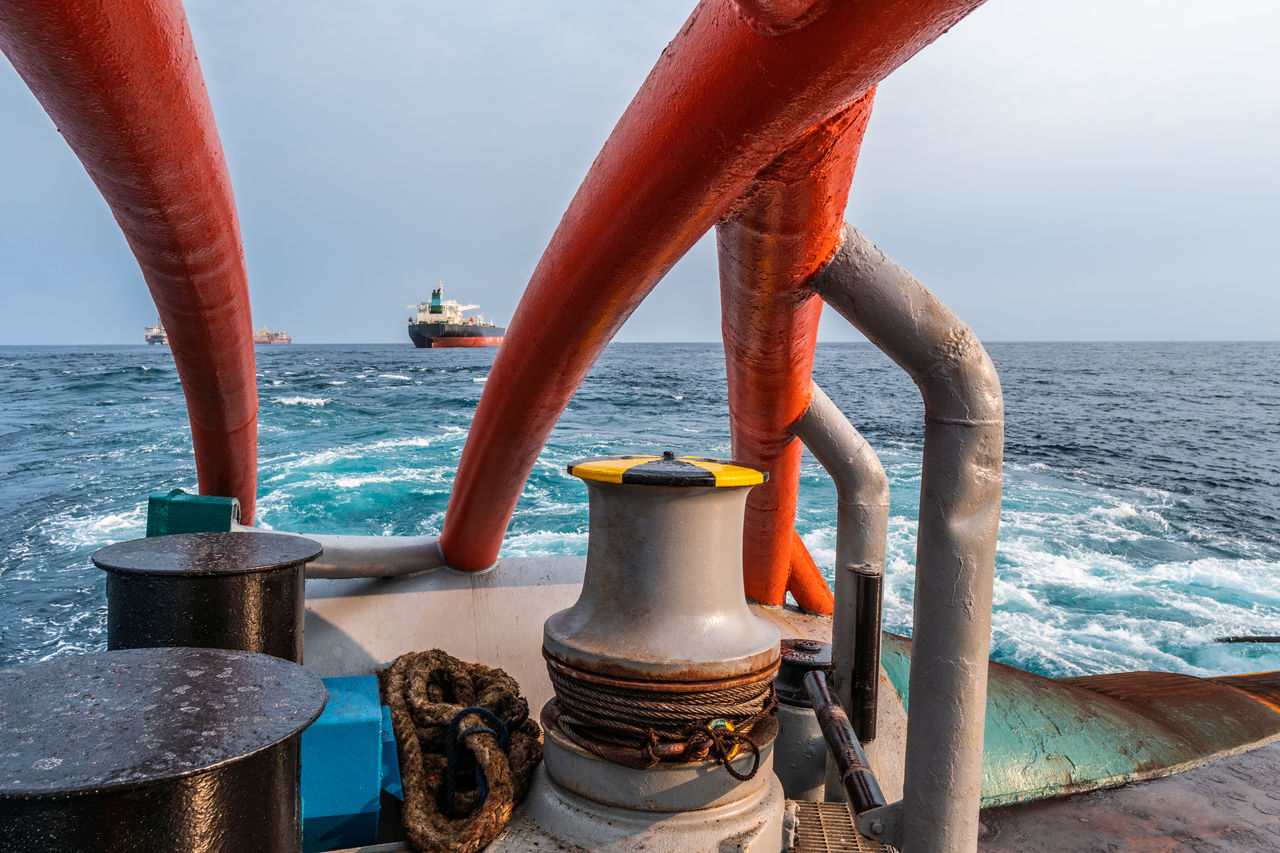
Air is the defining characteristic of bilge pumping. As vessels pitch and roll, bilge sumps uncover and recover suction in rapid cycles. Pumps are routinely exposed to alternating liquid and gas phases at the inlet, which fundamentally alters how energy is transferred into the fluid.
Many pump technologies rely on continuous liquid presence to generate head, maintain internal sealing or lubricate critical components. When air displaces liquid, performance drops sharply or pumping stops altogether.




Air-operated double diaphragm (AODD) pump technology, such as that offered by Wilden® and All-Flo™, uses compressed air as the motive force, so entrained air at the suction does not interrupt operation or damage internal components.
This behavior explains why diaphragm pumps are widely used during ship construction for temporary bilge service and drainage. They continue operating despite poor suction, debris ingestion and operator variability and resume full flow automatically when liquid returns.
Solids and Debris: Understanding Wear in Bilge Systems
Bilge fluids are abrasive by nature. Rust scale, sand and metal debris accelerate wear across all pump technologies, but the way that wear manifests differs significantly by design.
Tight-clearance designs deliver high efficiency in clean service, but even small solids can erode surfaces, increase internal leakage or cause components to seize. In bilge environments, this wear typically develops gradually without obvious warning until performance drops abruptly.
Three examples of pumps used in bilge systems include:
Centrifugal pumps, including marine variants from manufacturers such as Griswold®, perform well in auxiliary bilge and drainage services where debris is controlled and suction conditions are relatively stable.
Rotary positive displacement pumps, including Blackmer® sliding vane designs, provide consistent flow and self-priming capability and are well-suited for specific bilge duties when debris ingress is managed.
Air-operated double diaphragm pumps isolate wear to serviceable components such as valve balls, seats and diaphragms. Pumps from Wilden® and All-Flo™ are commonly selected because these components can be replaced quickly, allowing the pump to return to service without complete removal.
Intermittent Operation, Deadhead and Stall Behavior
Bilge pumps are rarely run continuously. They start and stop based on float switches, alarms or manual intervention. This intermittent duty cycle introduces two primary risks: deadheading and dry running.
In positive displacement systems, deadheading can cause a rapid pressure rise if not controlled. Air-operated double diaphragm pumps inherently stall when discharge pressure equals air supply pressure, limiting system stress without additional controls. This behavior is particularly valuable in bilge systems where discharge restrictions may occur unexpectedly.
Other pump technologies can also be applied successfully when paired with appropriate relief devices, controls and monitoring. The right choice depends on how much system complexity, instrumentation and oversight can be supported in the installation.
Bilge Pumping During Shipbuilding Versus Vessel Operation
Bilge pumping requirements differ between ship construction and active vessel operation, but the dominant failure drivers remain the same.
During shipbuilding, bilge pumps are exposed to extreme debris loads, welding residue, construction waste and frequent relocation.
Once a vessel enters service, bilge systems must meet regulatory and safety expectations. Pumps are installed permanently and integrated into alarm and control systems. Reliability and restart capability remain critical because bilge events are often high consequence.
Material Selection in Marine Bilge Environments
Material selection in bilge service is driven by corrosion resistance, hydrocarbon compatibility and long-term stability during idle periods.
Seawater exposure accelerates corrosion in carbon steel and aluminum components. Hydrocarbon contamination attacks incompatible elastomers. Temperature swings, stagnant fluids and biological growth further stress materials over time.
Elastomer selection must balance oil resistance, seawater exposure and resistance to swelling or embrittlement during extended idle periods.
Diaphragm materials are selected to maintain flexibility and sealing integrity over repeated start-stop cycles. Metal components are chosen to tolerate corrosion without seizing or galling.
Using proven materials and genuine replacement components reduces the risk of unexpected failures after long standby intervals and supports predictable lifecycle planning.
Why Efficiency May Be Secondary to Reliability in Bilge Systems
Bilge pumps may not operate continuously or define vessel energy consumption. Optimizing for efficiency at the expense of reliability can provide no operational benefit.
Instead, bilge systems are evaluated on their ability to respond immediately, clear water under degraded conditions and return to standby without damage.
Pumps that sacrifice efficiency for air handling capability, solids tolerance and predictable wear behavior often deliver superior lifecycle performance in marine service.

Selecting Bilge Pumps With Maintenance Reality in Mind
Marine maintenance teams prioritize pumps that can be serviced quickly with minimal tools. Access is limited, and downtime directly affects vessel availability.
In shipyards and active vessels, maintenance windows are short and conditions are challenging. Pumps from manufacturers such as Wilden®, All-Flo™, Blackmer® and Griswold® are commonly specified because they support established service practices, known performance envelopes and readily available replacement parts.
Diaphragm pumps allow wet-end service in place, while rotary and centrifugal pumps offer long service life when operating conditions are well defined.
Standardizing on proven pump platforms simplifies training, spare parts inventory and emergency response while improving long-term reliability.
For assistance in evaluating bilge pump options and configurations, tools such as the pump finder help narrow technology choices based on duty conditions.
When to Involve Application Support
Bilge pumping failures are often system failures rather than pump failures. Suction layout, hose routing, check valve placement and debris management all influence performance.
Engaging application specialists early reduces misapplication risk and ensures bilge systems are designed to tolerate real operating conditions rather than ideal assumptions. Support is available through the contact us page.
For additional information, please review our returns policy, shipping policy and terms and conditions, including our terms of use.
Contributors
Steve Cox
Steve Cox has extensive experience supporting marine and industrial pump applications, including bilge systems, shipbuilding utilities and terminal operations. His background spans diaphragm, vane and centrifugal technologies with a focus on serviceability and reliability.
Marco Bensley
Marco Bensley works closely with industrial and energy customers and has field experience with marine-adjacent pumping systems, including terminals and shipyard environments. His perspective emphasizes practical deployment and failure prevention in harsh conditions.
Frequently Asked Questions About Bilge Pumping
Bilge pumping is the process of removing accumulated water and contaminated fluids from the lowest areas of a vessel or marine structure. It is critical because uncontrolled bilge water can compromise vessel stability, damage equipment and create safety and environmental risks if not removed reliably.
Bilge pumping differs from most industrial applications because it must operate under degraded conditions. Bilge systems routinely encounter air ingestion, debris, variable suction and intermittent operation, which places greater emphasis on failure tolerance and restart reliability than on efficiency or precision.
Air is almost always present in bilge systems due to vessel motion and changing fluid levels. Pumps that cannot tolerate air lose prime and stop moving fluid. Bilge pumps must continue operating during air ingestion and automatically recover when liquid returns to ensure safety and uptime.
Bilge systems may use several pump types depending on the duty. Air-operated double diaphragm pumps are commonly selected for their air-handling ability and serviceability. Centrifugal pumps are used where suction is stable and debris is controlled. Positive displacement rotary pumps may be applied when consistent flow is required and operating conditions are well managed.
Bilge water often contains rust, sand and debris that accelerate wear. Pumps with tight internal clearances can lose performance quickly as abrasion increases. Bilge pump selection should account for predictable wear and ease of maintenance rather than assuming clean fluid conditions.
Bilge pumps should be selected based on worst-case operating conditions rather than ideal scenarios. Key considerations include air tolerance, solids handling, suction stability, material compatibility and ease of maintenance. Designing for predictable wear and reliable restart reduces downtime and lifecycle cost.

Find Your Pump
Just answer a few questions, and our Pump
Finder will guide you to the right solution!
PUMP FINDER


© 2026 PSG Dover All Rights Reserved